Innovation, Quantum-AI Technology & Law

Blog over Kunstmatige Intelligentie, Quantum, Deep Learning, Blockchain en Big Data Law

Blog over juridische, sociale, ethische en policy aspecten van Kunstmatige Intelligentie, Quantum Computing, Sensing & Communication, Augmented Reality en Robotica, Big Data Wetgeving en Machine Learning Regelgeving. Kennisartikelen inzake de EU AI Act, de Data Governance Act, cloud computing, algoritmes, privacy, virtual reality, blockchain, robotlaw, smart contracts, informatierecht, ICT contracten, online platforms, apps en tools. Europese regels, auteursrecht, chipsrecht, databankrechten en juridische diensten AI recht.

Mauritz Kop Guest Professor at US Air Force Academy

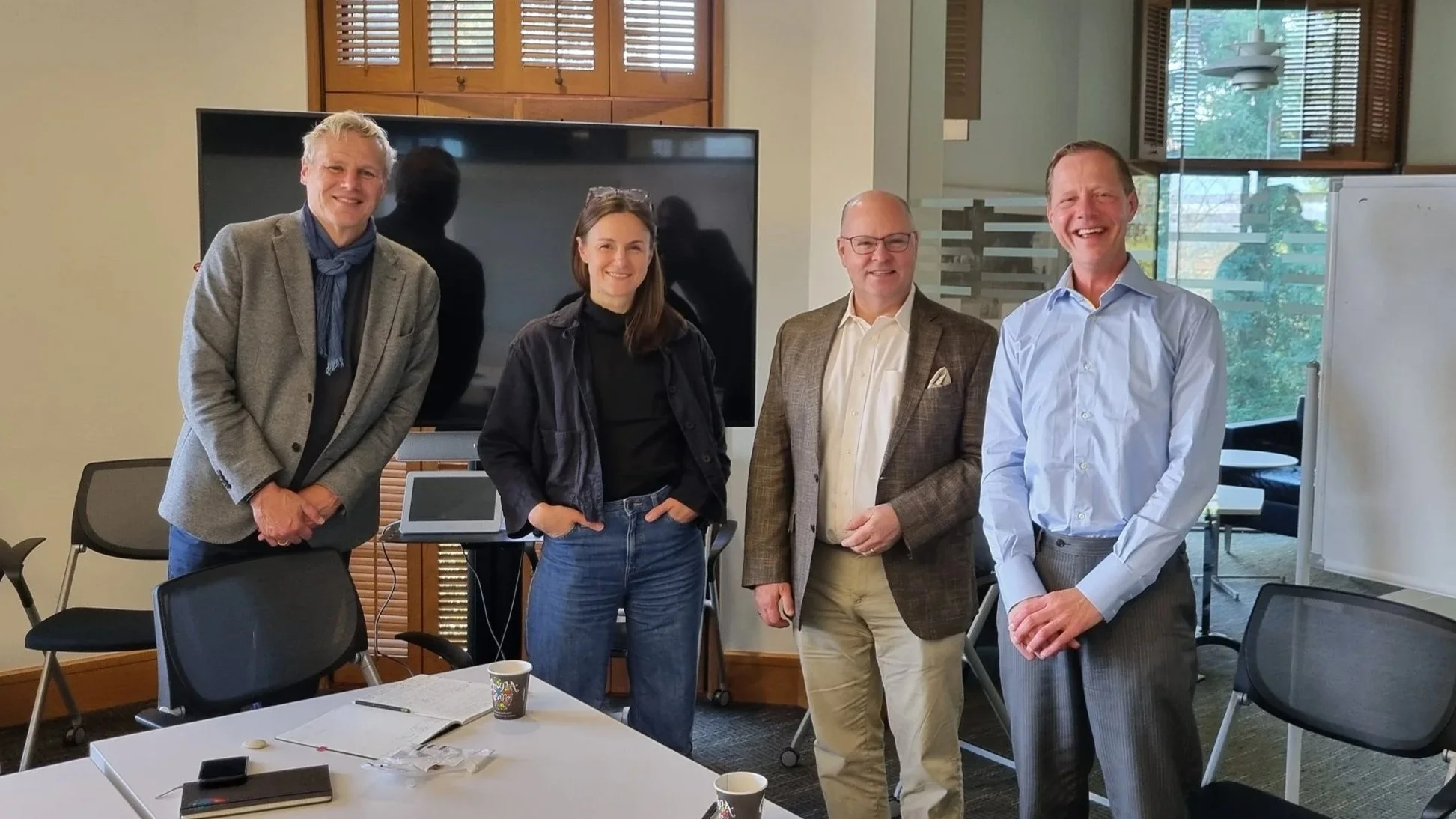
Colorado Springs, April 25, 2024. We are pleased to highlight Professor Mauritz Kop's recent engagement as a guest professor at the prestigious United States Air Force Academy on April 25, 2024. Professor Kop, Founding Director of the Stanford Center for Responsible Quantum Technology (RQT), addressed talented cadets on "Models for Responsible Regulation of Quantum Information Sciences." The class was an integral part of the Law and Emerging Tech program, led by Professor Aubrey Davis.

Professor Kop's lecture provided a comprehensive overview of the rapidly evolving landscape of quantum technologies and the critical need for proactive, responsible governance, particularly in the context of global geopolitical dynamics.

The Quantum Frontier: Opportunities and Geostrategic Challenges

The session commenced by acknowledging the significant global interest and investment in quantum technologies, noting China's relentless advances in AI and quantum, particularly in quantum networking, which has spurred anxieties about America’s technological supremacy. This technological race brings forth a deeper, existential concern: the potential effects of authoritarian regimes exporting their values into democratic societies through their technology.

Responsible Quantum Technology (RQT) and Its Operationalization

The discussion delved into the critical concept of Quantum-ELSPI (Ethical, Legal, Socio-economic, and Policy Implications), which must be proactively considered for any emerging technology. Quantum-ELSPI, he argued, should inspire the practice of Responsible Quantum Technology (RQT). The Stanford-led RQT framework integrates ELSPI perspectives into quantum R&D, deployment, and adoption, responding to the Responsible Research and Innovation (RRI) dimensions of anticipation, inclusion, reflection, and responsiveness (AIRR).

To make RQT actionable, Professor Kop introduced the 10 Principles for Responsible Quantum Innovation, developed by his multidisciplinary research group. These principles are organized under the SEA framework (Safeguarding, Engaging, and Advancing Quantum Technology) and aim to guide regulatory interventions and cultivate responsible practices across precautionary and permissionless innovation systems. Operationalizing these principles requires continuous multi-stakeholder collaboration throughout the lifecycle of quantum systems, involving standard-setting bodies like ISO, NIST, and IEEE, and potentially new oversight mechanisms like an "Atomic Agency for Quantum-AI".

The Role of Interdisciplinary Collaboration and Education

Highlighting the importance of diverse perspectives, Professor Kop, who integrates his background in law, music, and art into his quantum work, emphasized the need to go beyond siloed approaches to solve the hypercomplex matters arising from quantum technology. He referenced the Stanford Center for RQT's work, its multidisciplinary approach to tackling ELSPI, and its mission to foster competitive, values-based, equitable quantum ecosystems. Initiatives like the annual Stanford RQT Conference and the newly launched Stanford Quantum Incubator aim to bring the quantum community together, bridge gaps between academia, government, investors, and industry, and promote quantum literacy.

Professor Kop concluded by underscoring the urgent need for developing robust models for the responsible regulation of quantum information sciences to ensure that these powerful new capabilities benefit humanity and uphold democratic values.

Meer lezen
Hoover Institution Invites Mauritz Kop to Speak on Quantum, Democracy and Authoriarianism

Professor Mauritz Kop Addresses Quantum Technology's Role in the Era of Digital Repression at Hoover Institution Workshop

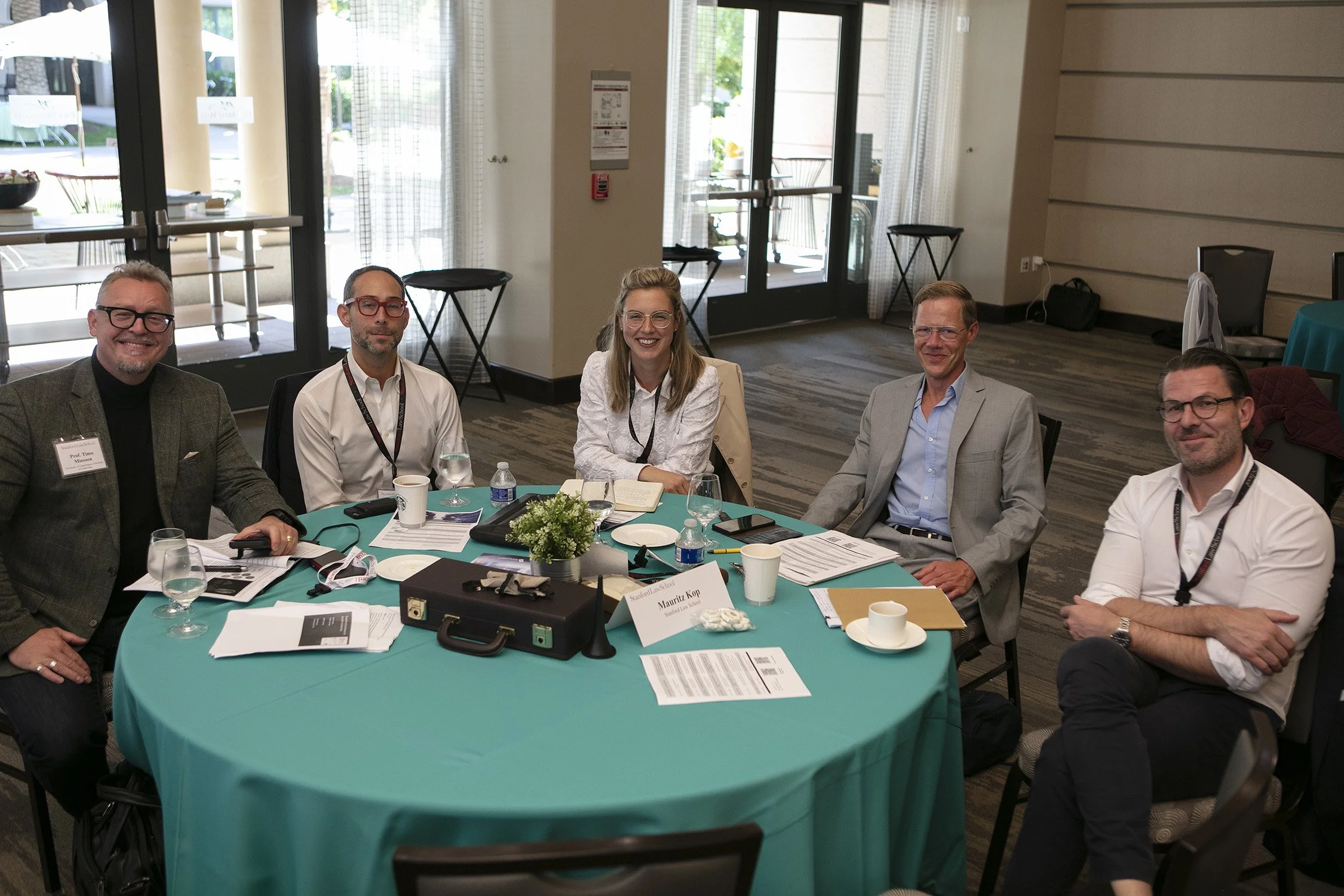
Palo Alto, CA – April 22, 2024 – Professor Mauritz Kop, Founding Director of the Stanford Center for Responsible Quantum Technology (RQT), delivered insightful opening remarks at a breakout session on Quantum Technology as part of the two-day closed door workshop, "Getting Ahead of Digital Repression: Authoritarian Innovation and Democratic Response." The workshop, held on April 22-23, 2024, at Hoover Institution, Stanford University, was a collaborative effort by the National Endowment for Democracy’s International Forum for Democratic Studies, Stanford University’s Global Digital Policy Incubator, and the Hoover Institution’s China’s Global Sharp Power Project.

The event convened leading researchers and advocates to map how digital authoritarians are innovating globally and to identify new strategies for ongoing knowledge-sharing and cooperation to confront this deepening challenge. The agenda focused on understanding how autocrats leverage emerging technologies—from AI and digital currencies to quantum technology—for social control, censorship, and to export their governance models.

Guardrails Against Digital Authoritarianism

Professor Kop's address served as a crucial discussion starter for the breakout session, which aimed to brainstorm how advances in quantum technology might alter the dynamics of the struggle against digital authoritarianism and to explore potential guardrails. His remarks underscored the profound societal impact of quantum technologies and the imperative for proactive, principles-based governance to ensure they are developed and deployed responsibly, safeguarding human rights and democratic values on a global scale.

Meer lezen
IOP Quantum Science and Technology publishes Ten Principles for Responsible Quantum Innovation

Stanford, April 22, 2024—The leading peer-reviewed journal Quantum Science and Technology has published the open-access article, "Ten Principles for Responsible Quantum Innovation," a significant paper that offers actionable guidance for the ethical development of quantum technologies. The publication is the result of a two-year, deeply interdisciplinary study by a transatlantic group of leading scholars and represents a major step forward in operationalizing a framework for responsible quantum innovation.

This work builds upon the foundational research of the group, including the "Towards Responsible Quantum Technology" paper published by the Harvard Berkman Klein Center, and will be central to the mission of the Stanford Center for Responsible Quantum Technology.

A Global, Interdisciplinary Collaboration

The paper is a testament to the power of global, interdisciplinary collaboration. Authored by a spectacular team of leading lights in law, philosophy & ethics, socioeconomics, data science, quantum physics, materials science & engineering, and innovation policy, the study brings together a wealth of expertise from the world's most prestigious academic institutions.

The author group, led by Mauritz Kop of Stanford University, includes Mateo Aboy (University of Cambridge), Eline De Jong (University of Amsterdam), Urs Gasser (Technical University of Munich), Timo Minssen (University of Copenhagen), I. Glenn Cohen (Harvard University), Mark Brongersma (Stanford University), Teresa Quintel (Maastricht University), Luciano Floridi (University of Oxford and Yale University), and Raymond Laflamme (University of Waterloo). This formidable team provides a holistic and robust foundation for the quantum governance principles outlined in the paper.

A Framework for Responsible Quantum Innovation

The paper's central contribution is a set of ten guiding principles designed to operationalize a framework for Responsible Quantum Technology (RQT). This framework seeks to integrate considerations of the Ethical, Legal, Social, and Policy Implications (ELSPI) of quantum technologies directly into the research and development lifecycle, while also responding to the core dimensions of Responsible Research and Innovation (RRI): anticipation, inclusion, reflection, and responsiveness.

The principles are organized into three functional categories, termed the SEA framework, which provides a methodological guide for the quantum community:

  • Safeguarding: This pillar focuses on the proactive identification and mitigation of risks associated with quantum technologies.

  • Engaging: This principle emphasizes the critical need for inclusive and continuous dialogue among all stakeholders, from researchers and industry to policymakers and the public.

  • Advancing: This pillar is dedicated to ensuring that quantum technology is actively steered towards desirable societal outcomes and contributes to addressing the world's most pressing challenges.

The Ten Principles for Responsible Quantum Innovation

The Ten Principles paper proposes the following ten actionable principles to help address the risks, challenges, and opportunities associated with the entire suite of second-generation quantum technologies:

  1. Information Security: Make information security an integral part of QT, proactively addressing security threats, including the risk quantum computers pose to current encryption standards.

  2. Dual Use: Proactively anticipate the malicious use of quantum applications by addressing the risks of dual-use technologies that can be employed for both beneficial and harmful purposes.

  3. Quantum Race: Seek international collaboration based on shared values to address the winner-takes-all dynamics of a potential quantum arms race.

  4. Quantum Gap: Consider our planet as the sociotechnical environment in which QT should function, engaging states to ensure equitable access and prevent a "quantum divide."

  5. Intellectual Property: Incentivize innovation while being as open as possible and as closed as necessary, engaging institutions to find the right balance between protecting intellectual property and fostering an open research environment.

  6. Inclusion: Pursue diverse R&D communities in terms of disciplines and people, engaging a wide range of voices to ensure a holistic approach to innovation.

  7. Societal Relevance: Link quantum R&D explicitly to desirable societal goals, advancing society by focusing on applications that address pressing needs.

  8. Complementary Innovation: Actively stimulate sustainable, cross-disciplinary innovation, advancing technology by exploring synergies with other fields like AI and biotechnology.

  9. Responsibility: Create an ecosystem to learn about the possible uses and consequences of QT applications, advancing our understanding of Responsible QT through continuous feedback and assessment.

  10. Education and Dialogue: Facilitate dialogues with stakeholders to better envision possible quantum futures, advancing our collective thinking and education about QT and its impact.

A Catalyst for a Values-Based Quantum Future

The overarching objective of this interdisciplinary effort is to steer the development and use of quantum technology in a direction that is not only consistent with a values-based society but also actively contributes to solving its most significant challenges. The "Ten Principles for Responsible Quantum Innovation" provides a crucial foundation for this work.

The paper is a call to action for the entire quantum community—researchers, industry leaders, policymakers, and the public—to engage in the vital work of building a responsible quantum ecosystem. As the authors conclude, the goal is to develop and operationalize these guiding principles into the best practices and real-world applications that will define the quantum future. The annual Stanford RQT Conference, among other initiatives, will continue to provide a forum for these critical, interdisciplinary discussions.

Meer lezen
Mauritz Kop Teaches Stanford Quantum Computing Association Students at Stanford Electrical Engineering

STANFORD, CA, April 16, 2024 – Today, Mauritz Kop, Founding Director of the newly established Stanford Center for Responsible Quantum Technology (RQT), delivered a lecture to the Stanford Quantum Computing Association (SQCA) at Stanford Electrical Engineering, titled "A Call for Responsible Quantum Technology." The interdisciplinary lecture was a featured event in the SQCA's distinguished "Industry Nights" speaker series and concluded with an engaging question-and-answer session with Stanford's outstanding physics, computer science, and electrical engineering students.

The Stanford Quantum Computing Association (SQCA)

The Stanford Quantum Computing Association (SQCA) serves as a vital hub for the university's burgeoning quantum community, connecting students across disciplines with the forefront of quantum innovation. SQCA’s mission is to establish and support a quantum computing community at Stanford by building bridges between students, researchers, and faculty from various departments interested in the field. Its "Industry Nights" series consistently hosts influential voices from leading companies and research institutions such as Google Quantum AI, D-Wave Quantum, and Quantinuum, providing quantum computing students with direct access to the field's pioneers. The SQCA also acts as a liaison between the Stanford quantum community and academic and industry groups outside the university. Its activities include hosting talks, holding workshops, and organizing projects.

Ethics, Law, Societal Impact, Economics, and Policy

During his talk, Professor Kop outlined a comprehensive vision for navigating the dawn of the quantum age. He introduced the concepts of the Quantum-ELSPI metaparadigm—which addresses the ethical, legal, socio-economic, and policy implications of the technology—and the Responsible Quantum Technology (RQT) framework developed by a transatlantic team of interdisciplinary scholars. The RQT framework, Kop explained, integrates these ELSPI perspectives into the entire lifecycle of quantum research and development, from the lab to the market.

To make this framework actionable, Kop presented the "10 Principles for Responsible Quantum Innovation," a guide designed to operationalize RQT. These principles are organized into three functional categories: Safeguarding, Engaging, and Advancing (SEA). A crucial insight shared was that safeguarding society and humanity can often be best achieved by responsibly advancing quantum technology. This vision was recently detailed in a paper co-authored by Kop and his team, "A Call for Responsible Quantum Technology," which was notably published in the prestigious journal Nature Physics on April 9, 2024, lending significant credibility to the mission of embedding responsible governance within the scientific community.

Stanford Center for RQT and Stanford Quantum Incubator (SQI) Launch

The lecture was also marked by two significant announcements for the Stanford quantum community. Kop officially introduced the Stanford Center for RQT, a new multidisciplinary center under his leadership that aims to influence the emerging quantum technology governance cycle and foster a competitive, values-based quantum ecosystem. He also unveiled the recent launch of the Stanford Quantum Incubator (SQI), a Silicon Valley business catalyst designed to bridge the gap between academia, government, investors, and industry to accelerate quantum development and adoption.

The presentation underscored the massive global implications of quantum technology, which is poised to transform everything from healthcare and energy to defense and materials science. By engaging directly with the next generation of quantum scientists and engineers at the SQCA, Kop emphasized the shared responsibility of the entire community to steer these powerful technologies toward beneficial societal and planetary outcomes while the field is still malleable.

Meer lezen
Nature Physics publishes A Call for Responsible Quantum Technology by Urs Gasser, Eline De Jong and Mauritz Kop

The leading journal Nature Physics has published "A Call for Responsible Quantum Technology," a significant Comment piece authored by a transatlantic team of scholars: Urs Gasser, Eline De Jong, and Mauritz Kop. Published on April 9, 2024, the article serves as a manifesto of the Stanford Center for Responsible Quantum Technology (RQT). It presents a compelling argument for proactively establishing ethical and societal guardrails for quantum technology (QT) while the field is still in its formative stages.

Citation: Gasser, U., De Jong, E. & Kop, M. A call for responsible quantum technology. Nat. Phys. 20, 525–527 (2024). https://doi.org/10.1038/s41567-024-02462-8

This foundational work builds upon the Stanford Center for RQT's prior scholarship, including the foundational paper "Towards Responsible Quantum Technology" published at Harvard and the University of California, and the "10 Principles for Responsible Quantum Innovation" published at IOP Science & Technology. All three authors are members of the Stanford RQT Center, which is founded and directed by Kop, who also served as the senior and corresponding author on the Nature publication. The article crystallizes the Center's crucial mission: to guide the development of quantum technologies in a direction that is safe, ethical, and beneficial for humanity and the planet.

Watch Urs Gasser and Eline De Jong present their Nature publication at the Stanford Responsible Quantum Technology Conference here: https://youtu.be/2vA9fID-7SA?si=MV67C9jN34UlsmuW&t=1279

The Core Argument: A Proactive Stance on Quantum Governance

The central thesis of "A Call for Responsible Quantum Technology" is both clear and urgent: the time to consider and implement governance frameworks for QT is now. The authors draw a crucial lesson from the history of other powerful innovations, such as nuclear fission and artificial intelligence (AI), where ethical, legal, and social considerations were often addressed reactively, "once the genie is already out of the bottle." Given the potentially transformative and disruptive power of quantum, the article argues that repeating this mistake is not an option.

A Framework for Responsible Quantum Innovation

To navigate this complex landscape, the authors propose a comprehensive framework for Responsible Quantum Technology. This is not a call for premature, heavy-handed legislation but for a systematic approach to anticipate and manage the ethical, legal, social, and policy implications (ELSPI) throughout the entire QT lifecycle.

The framework is designed to be operationalized through a set of quantum-specific guiding principles, which the authors organize into three functional categories, known as the SEA principles:

  • Safeguarding: Principles focused on mitigating downside risks, requiring that issues like information security and malicious dual-use scenarios are considered from the outset of research and development.

  • Engaging: Principles designed to foster robust interaction between innovators and diverse stakeholders to address complex issues like intellectual property, market competition, and equitable access.

  • Advancing: Principles that prioritize and incentivize the development of QT applications that serve desirable societal goals and the common good.

This layered approach, spanning technical, ethical, and socio-legal considerations, provides a navigational aid for researchers, funders, policymakers, and industry leaders, offering both an "issue spotter" to identify potential challenges and a "compass" to guide the technology's trajectory.

The Authors of the Nature Publication on Responsible Quantum Technology

The Nature article is a product of deep interdisciplinary expertise, authored by three leading figures at the Stanford Center for Responsible Quantum Technology:

Urs Gasser is a distinguished Professor at the Technical University of Munich (TUM), where he is Dean of the TUM School of Social Sciences and Technology. A Fellow at the Stanford RQT Center, he was previously the Executive Director of the Berkman Klein Center for Internet & Society at Harvard University. His research focuses on the societal and regulatory implications of emerging technologies, bringing a wealth of experience in technology law and policy.

Eline De Jong is a Dutch philosopher and ethicist serving as a Fellow at the Stanford RQT Center. She is currently a PhD candidate at the University of Amsterdam, specializing in the philosophy and ethics of quantum technology. Her background includes advising the Netherlands Scientific Council for Government Policy on the societal impact of AI, providing a deep understanding of the co-evolution of technology and society.

Mauritz Kop, the Founding Director of the Stanford RQT Center and the article's senior and corresponding author, is a tech lawyer, policy advisor, and academic whose work focuses on creating sui generis governance frameworks for exponential technologies like AI and quantum. His scholarship, published by leading institutions globally, aims to integrate risk management, regulatory compliance, and safety standards directly into the innovation process.

This collaboration between legal, policy, and ethics scholars underscores the article's central message: ensuring a responsible quantum future requires a concerted, interdisciplinary, and international effort. As the manifesto for the Stanford Center for RQT, Nature’s "A Call for Responsible Quantum Technology" is a foundational text, setting a clear and principled agenda for the global quantum community.

Meer lezen
Mauritz Kop Reviews Der Derian’s Project Q: War, Peace and Quantum Mechanics

Stanford University, April 1, 2024—In an era defined by rapid technological acceleration, the quantum revolution looms as perhaps the most profound and least understood transformation on the horizon. It is a domain where the esoteric principles of physics—superposition, entanglement, and uncertainty—are migrating from theoretical blackboards to the geopolitical chessboard. It is this critical, and often unsettling, intersection of science, society, and security that James Der Derian’s consequential new documentary, Project Q: War, Peace and Quantum Mechanics, masterfully explores. Having been graciously invited by the film’s producers at Bullfrog Films to review this important work as the Founding Director of the Stanford Center for Responsible Quantum Technology, Mauritz Kop found it to be an essential primer for what may well be the defining technological challenge of the 21st century.

The film serves as a crucial vehicle for fostering what Mauritz Kop calls ‘quantum literacy’—a foundational understanding of not just the science, but the societal, ethical, and political ramifications of quantum technologies, and their inherent dual-use nature. Der Derian, a distinguished scholar of international relations and director of the Centre for International Security Studies at the University of Sydney, is uniquely positioned to guide this inquiry. He eschews a purely technical exposition, instead weaving a narrative that brings together a diverse chorus of voices: leading physicists, philosophers, national security experts, artists, and historians. This multidisciplinary approach is the film’s greatest strength, transforming a subject that could easily be arcane and inaccessible into a deeply human and urgent conversation.

A Summary of the Film: The Quantum Conundrum

Project Q dives headfirst into the rapidly advancing world of quantum science, highlighting the massive investments by governments, corporations, and universities while probing the unanswered questions about humankind's quantum future. The documentary skillfully unpacks the foundational elements of quantum mechanics for a lay audience. It introduces concepts like complementarity, Niels Bohr’s principle that objects can exhibit contradictory properties, such as being both a wave and a particle, but not simultaneously. It visualizes superposition through the famous Schrödinger's cat analogy, where a particle—or a cat in a box—can exist in multiple states at once until the moment it is observed.

Project Q in Sydney: A Conclave for the Quantum Age

The documentary is inextricably linked to the real-world initiative from which it takes its name. Project Q, based at the University of Sydney, is an ambitious undertaking to bridge the gap between the scientists building the quantum future and the humanists, policymakers, and public who will inhabit it. A ‘quantum risk lab’'. The project’s home is the Q Station in Sydney, a former quarantine station with a history of isolating and managing existential threats. This setting serves as a poignant backdrop, a physical manifestation of the need to grapple with the potentially world-altering implications of quantum technology before they arrive unchecked.

A Must-Watch Call for Quantum Literacy

Project Q is a documentary of profound importance and timeliness. It is a wake-up call, an invitation to a global conversation that has been largely confined to laboratories and classified government briefings. Der Derian has crafted a film that is both intellectually rigorous and deeply accessible, challenging its audience to think critically about the path we are on. By exploring both the risks and benefits of quantum innovation, the film offers a vital multidisciplinary perspective on how this emerging suite of technologies might reshape global peace, security, and politics.

Meer lezen
Stanford Quantum Incubator Launched at Stanford Law School

Stanford, March 31, 2024—Today, we are thrilled to announce the launch of the Stanford Quantum Incubator (SQI)—a Silicon Valley business catalyst dedicated to advancing quantum technology development and adoption both regionally, nationally, and beyond. Situated at the prestigious Stanford Law School, the Stanford Quantum Incubator stands as a pivotal force, bridging the critical gap between academia and industry to foster an environment ripe for much-needed innovation and economic growth.

Stanford Quantum Incubator: Bridging Academia and Industry

Operating from the center of the emerging quantum startup scene, the Stanford Quantum Incubator will help galvanize and attract startups and university spin-offs in the quantum and AI space. It will also serve as a nexus for the broader investment community—including venture capitalists, angel investors, accelerators, banks, and funds—and other essential stakeholders, from hardware manufacturers to cloud and software providers.

The launch of SQI comes at a pivotal moment for the United States. In the wake of the 2022 Biden Executive Orders on Quantum, the CHIPS and Science Act, and the 2023 Executive Order on the Safe, Secure, and Trustworthy Development and Use of Artificial Intelligence, the imperative to cultivate a competitive and responsible quantum ecosystem has never been more pronounced. These government directives are accelerating investment in quantum information science (QIS) and catalyzing a host of new opportunities for public-private collaboration. It is essential that the quantum community capitalizes on this momentum.

We start the Stanford Quantum Incubator at a time when groundbreaking innovations in second-generation quantum technologies are making their way from the lab into the markets. These advancements span quantum computing, cryptography, sensing, simulation, and networking, with transformative applications in sectors such as Life Sciences and Healthcare, Finance, Cybersecurity, Manufacturing, Logistics, Automotive, Defense, and Space.

Inaugural Stanford SQI Fellows Bring a Wealth of Venture Capital Expertise

The success of this ambitious endeavor is anchored by the wisdom and experience of its leadership and advisors. The Stanford Quantum Incubator is honored to introduce its inaugural Fellows, a group of distinguished leaders from the worlds of venture capital, technology, and cybersecurity. The SQI team consists of Fellows Bradley Horowitz, David Hornik, Greg Berkin, and SQI Founding Director Mauritz Kop

A Catalyst for Responsible Quantum Innovation

Building on decades of combined entrepreneurial experience, SQI will develop a comprehensive suite of student/founder mentorship and support services designed to propel startups and scale-ups to success. Guidance will span sustainable business models, legal compliance, performance benchmarking, intellectual property portfolio optimization, and technology transfer. The incubator will directly address the multifaceted ethical, legal, societal, and policy challenges (Quantum-ELSPI) inherent in developing quantum hardware, software, and quantum-classical hybrids.

Central to SQI’s mission is a profound commitment to collaboration. Operating within a quadruple helix model that unites academics, industry professionals, policymakers, and end-users, SQI is positioned to become the epicenter of forward-looking, exponential quantum innovation. To this end, plans are underway to host a recurring networking workshop, in partnership with respected VC tech incubators, to both operationalize the Responsible Quantum Technology (RQT) framework and foster a globally leading, values-based quantum ecosystem.

SQI Networking Event at Stanford Law

The inaugural SQI Networking Event at Stanford Law School is set for November 1, 2024. This workshop aims to establish a local, values-based quantum network that aligns with the RQT framework, positioning the Bay Area at the heart of quantum advancement. The event promises to be an exclusive gathering, featuring presentations from luminaries in the field, startup pitches, and ample opportunities for networking. By encouraging investment and deal flow, this process will amplify responsible quantum technology development, with a clear goal of producing multiple quantum unicorns by 2030.

As we stand on the cusp of the Quantum Age, the Stanford Quantum Incubator invites the broader Silicon Valley innovation cluster to join in this pioneering, interdisciplinary endeavor. A quality-labeled ‘Quantum Made in US’ paradigm, infused with AI and quantum talent and a culture of boundless possibility, can help American companies become leaders in making scalable quantum applications that create real business value and benefit society. By facilitating university-market collaboration, SQI is poised to be an effective catalyst for leadership in the imminent quantum revolution.

For those eager to contribute to and participate in this exciting venture, we encourage you to reach out to Mauritz Kop, Founding Director of the Stanford Center for RQT, for more information. Together, we can unlock the boundless potential of quantum technology and AI, creating a future that benefits us all.

Meer lezen
Stanford Law’s Mauritz Kop advises UK Regulatory Horizons Council on Regulating Quantum Technology Applications

London, UK, February 28, 2024— The global race to harness the transformative potential of quantum technology is well underway. As nations position themselves at the forefront of this scientific and industrial revolution, the United Kingdom has taken a decisive step to not only lead in innovation but also in the thoughtful development of its regulatory landscape. A key milestone in this journey is the recent report on "Regulating Quantum Technology Applications" by the UK's Regulatory Horizons Council (RHC). It was an honour for Mauritz Kop to contribute to this important and timely work, and this post will delve into the background, his advisory role, and how scholarship from the Stanford Program in Law, Science and Technology (LST) directed by Professor Mark Lemley has helped shape the UK's pro-innovation approach to quantum governance.

Centre for Science and Policy’s Expert Network at the University of Cambridge

On August 8, 2023, Mauritz Kop, Visiting 'Quantum & Law' Scholar at Stanford University, had the honour of advising the UK's Regulatory Horizons Council, an expert committee that counsels the government on regulatory reform for emerging technologies. In his discussion with Tom Newby (Policy Fellow, Centre for Science and Policy at the University of Cambridge) of the RHC, Kop advocated for a pro-innovation regulatory framework—one that fosters growth and attracts investment while proactively addressing societal risks. He is delighted to see that his recommendations and overall vision of regulating quantum have been significantly reflected in the final report, which will now directly inform the UK's national quantum policy.

This engagement builds upon a foundation of extensive scholarship, including his work within the Cambridge University network and, most notably, research at the imminent Stanford Center for Responsible Quantum Technology. Its publications, such as the "10 Principles for Responsible Quantum Innovation" and "Regulating Transformative Technology in The Quantum Age: Intellectual Property, Standardization & Sustainable Innovation," have provided a robust intellectual framework for the very challenges the RHC was tasked to address.

A Pro-Innovation and Responsible Approach to Regulating Quantum & AI

His advice to the RHC was guided by the core vision of the imminent Stanford Center for Responsible Quantum Technology: to foster a regulatory environment that is enabling, not stifling. A pro-innovation framework, as he argued, is crucial for attracting domestic and international talent and investment. Innovators and investors are drawn to jurisdictions that offer regulatory clarity and a commitment to responsible development. By establishing such an environment, the UK can position itself as a premier destination for the burgeoning quantum industry.

The RHC report embraces this philosophy. It explicitly rejects a one-size-fits-all regulatory model and instead advocates for a nuanced, application-specific approach. Recognizing that quantum technologies are at varying stages of development, the report wisely suggests that the timing and nature of regulatory interventions should be carefully calibrated. This aligns with the view that governance should be agile and adaptive, evolving in step with the technology itself.

The Influence of the "10 Principles for Responsible Quantum Innovation" on UK Quantum Governance

Kop was particularly pleased to see the RHC report explicitly reference and incorporate the "10 Principles for Responsible Quantum Innovation." This framework, developed by Kop’s interdisciplinary team at Stanford Law School, is the culmination of interdisciplinary collaboration aimed at providing actionable guidance for policymakers, innovators, and other stakeholders in the quantum ecosystem.

The Path Forward: A New Model for Tech Governance

The collaboration between the Stanford Center for Responsible Quantum Technology and the UK's Regulatory Horizons Council exemplifies a new and promising model for technology governance. As we stand on the cusp of a quantum revolution, it is imperative that we move beyond the reactive regulatory postures of the past. The development of transformative technologies requires proactive and thoughtful engagement from all stakeholders, and academia has a crucial role to play in providing the intellectual frameworks and evidence-based analysis needed to inform sound policymaking.

Meer lezen
Mauritz Kop and Mark Lemley Host High-Level EU Cybersecurity Delegation at Stanford Law

Stanford, CA – On February 26, 2024, the Stanford Center for Responsible Quantum Technology (RQT), a leading interdisciplinary hub operating under the aegis of the Stanford Program in Law, Science & Technology, had the distinct honor of hosting a high-level cybersecurity delegation from the European Commission. The meeting, led by the Center’s Founding Director, Mauritz Kop, and Professor Mark A. Lemley, Director of the Stanford Program in Law, Science & Technology, underscored the growing importance of transatlantic dialogue in shaping the future of digital security and responsible innovation in the quantum age.

The Stanford Center for RQT is dedicated to steering the development and application of quantum technologies toward outcomes that are not only innovative but also equitable, transparent, and beneficial for society at large. Its mission is to proactively address the complex ethical, legal, societal, policy and interoperability implications of quantum advancements, fostering a global ecosystem grounded in democratic values and human rights. The Center was officially inaugurated on December 6, 2023, by His Excellency Mark Rutte, then Prime Minister of the Netherlands and the current Secretary General of NATO, a testament to the geopolitical significance of its work. This recent meeting with the EU delegation builds on that foundation, reinforcing the Center’s role as a crucial bridge between Silicon Valley’s technological frontier and the world’s leading policymakers.

The dialogue centered on some of the most pressing challenges and opportunities at the intersection of quantum technology and cybersecurity, including building global capacity for responsible innovation and aligning EU and US national security strategies.

The EU Cybersecurity Delegation at Stanford RQT

The European Commission’s Cybersecurity Delegation was led by Gerard de Graaf, the Senior Envoy for Digital to the U.S. and Head of the European Union Office in San Francisco. A veteran of the European Commission with a distinguished career spanning several key digital policy areas, Mr. de Graaf is at the forefront of the EU’s efforts to promote a human-centric, ethical, and secure digital transition. His role involves strengthening transatlantic cooperation on digital regulation, from data governance and AI to cybersecurity and platform accountability. Mr. de Graaf, who was also present at the Center’s inauguration, has been a pivotal figure in shaping the EU’s landmark digital policies, including the General Data Protection Regulation (GDPR) and the Digital Services Act (DSA). His leadership in the San Francisco office is instrumental in fostering dialogue between European regulators and the heart of the global tech industry.

Accompanying Mr. de Graaf were Joanna Smolinska, Deputy Head of the EU Office in San Francisco and a key figure in transatlantic tech diplomacy, and Ilse Rooze, a Seconded National Expert at the EU Office who brings deep expertise in digital policy and international relations.

Representing Stanford were Mauritz Kop and Professor Mark A. Lemley. Mr. Kop is a pioneering scholar in the governance of emerging technologies, with a focus on quantum, AI, and intellectual property. As the Founding Director of the RQT Center, his work is dedicated to creating robust legal and ethical frameworks to ensure that transformative technologies are developed and deployed responsibly. Professor Lemley is the William H. Neukom Professor of Law at Stanford Law School and one of the world's most cited scholars in intellectual property and technology law. His extensive work on innovation, competition, and the digital economy provides a critical legal and economic lens through which to view the challenges of the quantum era.

The Quantum Cybersecurity Challenge: Preparing for Q-Day

A central theme of the discussion was the looming threat that fault-tolerant quantum computers pose to global cybersecurity. The immense processing power of these future machines will render much of the world’s current cryptographic infrastructure obsolete. This critical juncture, often referred to as “Q-Day” or the “Quantum Apocalypse,” is the moment when a quantum computer will be capable of breaking widely used encryption standards like RSA and ECC, which protect everything from financial transactions and government communications to personal data and critical infrastructure.

The implications of Q-Day are profound. Malicious actors could potentially decrypt vast archives of stolen encrypted data—a scenario known as "harvest now, decrypt later." This retroactive decryption capability poses a severe threat to long-term data security, national security, and economic stability.

In his opening remarks, Mauritz Kop emphasized the urgency of a proactive, coordinated global response. The conversation explored the transition to Post-Quantum Cryptography (PQC), a new generation of cryptographic algorithms designed to be resistant to attacks from both classical and quantum computers. The U.S. National Institute of Standards and Technology (NIST) is in the final stages of standardizing a suite of PQC algorithms, a process closely watched by governments and industries worldwide. The delegation discussed the immense logistical, technical, and financial challenges of migrating global IT systems to these new technical standards—a process that is expected to take more than a decade and require unprecedented public-private collaboration.

The discussion also touched upon other quantum security technologies, such as Quantum Key Distribution (QKD), which uses the principles of quantum mechanics to create secure communication channels. While PQC focuses on developing new mathematical problems that are hard for quantum computers to solve, QKD offers a physics-based approach to security. The participants explored how these different technologies could complement each other in a future-proof security architecture.

Meer lezen
Princeton University’s Liechtenstein Institute on Self-Determination’s visits Stanford Center for Responsible Quantum Technology

On Wednesday, January 22, 2024, the Stanford Center for Responsible Quantum Technology (RQT) had the distinct pleasure of hosting a delegation from Princeton University’s Liechtenstein Institute on Self-Determination (LISD) for a dynamic discussion on transatlantic technology policy at Stanford Law School. The event was marked by great energy and a profound exchange of ideas, reflecting the shared commitment of both institutions to navigating the complex intersection of emerging technology, global governance, and societal values.

Princeton LISD leadership and their talented International Policy Associates at Stanford RQT

As the host of the meeting, Professor Mauritz Kop had the opportunity to welcome the LISD leadership and their talented International Policy Associates. He provided an overview of the mission of the Stanford RQT, explaining our framework for ensuring that quantum technologies are developed and integrated into society in a manner that is safe, ethical, and equitable. This introduction served as a foundation for a rich and meaningful conversation, where the Princeton fellows posed insightful questions. The discussion traversed a wide spectrum of pressing topics, including the challenges of regulating the suite of quantum technologies, the discovery of quantum use cases in healthcare, the complexities of export controls and quantum materials supply chains, and the crucial interface between AI and quantum computing. Furthermore, we explored the application of universal democratic values and culturally sensitive ethics to these new domains, comparing the innovation systems of the US, EU, and China, and considering the potential for technology to drive both scarcity and abundance on a planetary scale.

Freeman Spogli Institute for International Studies (FSI) and Stanford Graduate School of Business (GSB)

The engagement at the RQT was a cornerstone of the LISD delegation's broader visit to Northern California, which included several high-level meetings across Stanford University. The group’s thank-you message noted their "incredibly enriching visit" and the comprehensive nature of their discussions. Their agenda also included conversations with preeminent scholars Professor Francis Fukuyama and Professor Michael McFaul at the Freeman Spogli Institute for International Studies (FSI), and a meeting with Dean Jon Levin of the Stanford Graduate School of Business (GSB). According to the delegation, these dialogues covered a range of vital geopolitical issues, from the war in Ukraine and a possible attack on Taiwan to Stanford's pivotal role in innovation, highlighting the "multifaceted impact of technology on democracy." The visit also provided an opportunity for the delegation to connect with Princeton alumni in the region.

Collaborating on global challenges and opportunities presented by quantum technologies

The esteemed LISD delegation was led by its senior leadership, including Sophie Meunier, the Acting Director of LISD and a Senior Research Scholar at the Princeton School of Public and International Affairs; Nadia Crisan, the Executive Director of LISD; Jonathan Fredman, a Non-Resident Fellow and former senior leader at the Central Intelligence Agency; and Jana-Alessa Peper, the Institute Assistant who coordinates the IPA program. They were accompanied by the LISD’s International Policy Associates, a cohort of students pursuing careers in foreign policy and international business, who brought a diverse array of academic and professional interests to the discussion.

The dialogue reinforced the critical importance of building bridges between institutions and disciplines. The exchange of perspectives between Stanford’s technology and policy experts and Princeton’s specialists in international affairs and self-determination created a unique and valuable synergy. We extend our sincere thanks to the entire LISD delegation for a stimulating and productive session that has undoubtedly planted the seeds for future collaboration in addressing the global governance challenges and opportunities presented by quantum and other advanced technologies.

Meer lezen
Stanford University Launches Stanford Center for Responsible Quantum Technology

Stanford, CA – December 6, 2023 – Stanford University today announced the launch of the Stanford Center for Responsible Quantum Technology (RQT), a pioneering initiative dedicated to addressing the profound ethical, legal, social, and policy implications of the rapidly advancing field of quantum technologies, including quantum artificial intelligence (QAI). The Center, part of the Stanford Program in Law, Science & Technology (LST) at Stanford Law School (SLS), is believed to be the first academic center of its kind.

Dutch Network for Academics in the USA Semicon, Geopolitics and Shared Values Event

The announcement was made during a distinguished Dutch Network for Academics in the USA event focused on semicon, geopolitics and shared democratic values, presented by the Stanford Institute for Economic Policy Research (SIEPR). The occasion was graced by the presence of outgoing Netherlands Prime Minister Mark Rutte, Nobel Prize winner and Stanford School of Business Professor Guido Imbens, Stephen Harris Professor of Materials Science and Engineering Mark Brongersma, and William H. Neukom Professor of Law Mark Lemley, who is also the Director of the LST program and serves as the faculty leader of the new Quantum Institute.

Mauritz Kop Founding Director of the Stanford Center for Responsible Quantum Technology

Mauritz Kop, who founded and directs the Center and began his tenure as a Transatlantic Technology Law Forum Fellow at Stanford Law School in 2019, highlighted the critical juncture at which the Center is being established. "Quantum technologies—especially in the areas of encryption, computing, and sensors—were rapidly evolving from hypothetical ideas to commercial realities," Kop observed. "Here, I determined, was where the most interesting–and pressing–questions of law and policy lay. Put simply, quantum technology involves the smallest particles in the universe but has the potential to create some of the world’s biggest technological quandaries and opportunities."

Stanford University Library RQT Scholarship Repository of Selected Works: https://purl.stanford.edu/hp536nb5631

Meer lezen
Mauritz Kop Judge at 6th Annual Junior Faculty Forum for Law and STEM at Stanford

On October 27, 2023, Stanford Law School hosted the 6th Annual Junior Faculty Forum for Law and STEM, a premier event organized and hosted by Professor Mark Lemley that convenes the next generation of leading legal scholars to present and refine their cutting-edge research. The forum, which rotates between Stanford, the University of Pennsylvania, and Northwestern University, provides a vital platform for interdisciplinary dialogue on the complex legal challenges posed by rapid scientific and technological advancement. Mauritz Kop, a recognized expert in technology law and governance, had the honor of serving as a judge and commentator, contributing to the rigorous intellectual exchange that defines the event.

The forum's mission is to foster the development of early-career academics by providing a supportive yet critical environment for them to receive feedback from senior scholars in their fields. Over two days, junior faculty presented works-in-progress on a diverse array of topics, from the metaverse and quantum computing to medical device regulation and genome governance, showcasing the breadth and depth of contemporary law and STEM scholarship.

The Call for Papers: Fostering Interdisciplinary Law & Technology Scholarship

The selection of presenters for the forum is a rigorous process, initiated by a formal Call for Papers issued by the organizing universities: Northwestern, the University of Pennsylvania, and Stanford Law School. The call invites junior faculty from any discipline to submit papers on any topic related to the intersection of law and STEM. The goal is to promote interdisciplinary research that explores how developments in STEM are affecting law and vice versa, with a preference for papers that strongly integrate these two fields.

A Rich Tapestry of Emerging Legal Questions

The agenda for the 2023 forum was a testament to the pressing legal and ethical questions emerging from the frontiers of science and technology. The papers presented offered a glimpse into the future of legal scholarship and the complex societal issues that lawmakers, judges, and regulators will face in the coming years.

Among the thought-provoking works discussed were:

  1. "Taxing the Metaverse" by Christine Kim (Cardozo School of Law): This paper tackles the novel challenge of how to apply principles of taxation to the burgeoning virtual economy. Kim argues that economic activity within the metaverse satisfies traditional definitions of income and that failing to tax it would create a new kind of tax haven. The paper explores how the metaverse could serve as a laboratory for modernizing the tax system, potentially overcoming the traditional realization requirement.

  2. "Regulating Medical Device Innovation" by George Horvath (University of Akron School of Law): Horvath reframes the debate around medical device safety, moving beyond the narrow concept of "predicate creep" in the 510(k) clearance process to a broader analysis of "device creep." He makes the counterintuitive argument that properly structured safety regulations can stimulate, rather than stifle, innovation by building a more robust clinical knowledge base.

  3. "Who Owns Children's DNA?" by Nila Bala (UC Davis School of Law): This article addresses the critical and underexplored issue of parental control over children's genetic information. Bala argues that parental consent is an insufficient safeguard against the collection and use of a child's DNA by law enforcement, particularly in the context of direct-to-consumer genetic testing. She proposes moving from a framework of parents-as-owners to parents-as-fiduciaries, drawing on property law principles to protect the child's long-term interests.

  4. "Gene Stewards: Rethinking Genome Governance" by Shelly Simana (Stanford Law School): Simana confronts the exploitative practices of entities that collect and use human genetic material. She proposes a new statutory category of "Gene Stewards," which would impose quasi-fiduciary duties of loyalty and care on these powerful public and private entities, ensuring they act as responsible stewards of this sensitive information.

Reviewing "Privacy in the Quantum Age"

As part of his role, Mauritz Kop, alongside Professor Christopher Yoo of the University of Pennsylvania, served as a commentator for the paper "Privacy in the Quantum Age" by Anat Lior (Yale Law School). Lior's paper addresses the profound privacy implications of quantum computing, particularly its potential to break current encryption standards.

In his review, Kop commended Lior for her courage in tackling such a complex and deeply interdisciplinary subject. He emphasized the need for legal scholars entering this domain to achieve a high level of "quantum literacy" to engage credibly with both the technology's promise and its perils. He offered several pieces of constructive feedback aimed at strengthening the paper's impact and scholarly contribution.

Meer lezen