
Innovation, Quantum-AI Technology & Law

Blog over Kunstmatige Intelligentie, Quantum, Deep Learning, Blockchain en Big Data Law

Blog over juridische, sociale, ethische en policy aspecten van Kunstmatige Intelligentie, Quantum Computing, Sensing & Communication, Augmented Reality en Robotica, Big Data Wetgeving en Machine Learning Regelgeving. Kennisartikelen inzake de EU AI Act, de Data Governance Act, cloud computing, algoritmes, privacy, virtual reality, blockchain, robotlaw, smart contracts, informatierecht, ICT contracten, online platforms, apps en tools. Europese regels, auteursrecht, chipsrecht, databankrechten en juridische diensten AI recht.

Berichten met de tag Societal Impact
Mauritz Kop Speaker at United Nations International Year of Quantum Science and Technology 2025

On 31 October 2025, Mauritz Kop, Founder of Stanford RQT (Responsible Quantum Technology), served as one of the main speakers at the North America regional workshop on the Ethical, Legal, and Social Aspects (ELSA) of Broadening Global Ownership of Quantum Technologies. The online workshop was part of the United Nations International Year of Quantum Science and Technology 2025 (IYQ 2025), a year-long initiative mandated by the United Nations General Assembly (UNGA) and led by the United Nations Educational, Scientific and Cultural Organization (UNESCO) to mark 100 years of quantum mechanics and to address the emerging “quantum divide” in access, skills, and infrastructure.

The North America edition was convened by Dr. Zeki C. Seskir and Professor Shohini Ghose as part of a six-region ELSA-of-quantum workshop series. Each regional workshop is feeding into a global IYQ event on the Ethical, Legal, and Social Aspects of Broadening Global Ownership of Quantum Technologies to be held in Istanbul in November 2025.

The program brought together four principal speakers—Mauritz Kop, Bruna Shinohara de Mendonça, Lindsay Rand, and Isabelle Lacroix—and designated commentators Rodrigo Araiza Bravo and Karl Thibault. The workshop closed with an open discussion in which participants reflected on regional needs, expected impact, and the kind of alignment that is necessary for a fair and secure quantum future.

The International Year of Quantum and the North America ELSA Workshop

The International Year of Quantum Science and Technology 2025 was proclaimed by the United Nations General Assembly in June 2024. The resolution calls on states and international organizations to use 2025 to raise public awareness of quantum science, promote education and capacity-building—especially in the Global South—and strengthen cooperation so that all countries can participate in and benefit from quantum technologies.

Within this broader mandate, the ELSA of Broadening Global Ownership of Quantum Technologies initiative focuses on quantum governance. The North America workshop was explicitly framed around three questions:

  1. Which ethical, legal, and social aspects of quantum technologies are most urgent for North America today?

  2. Which ELSA topics are most important globally?

  3. How should the future of ELSA and related policy implications be shaped in Europe, North America, and worldwide, and what forms of alignment are needed?

The three-hour program opened with an overview of the IYQ ELSA event series, followed by the four invited talks, a short break, and then a structured discussion and closing reflections.

From ELSA to ELSPI: A Metaparadigm for Quantum Governance

Kop’s keynote, “From ELSA to ELSPI: A Metaparadigm for Quantum Governance,” drew on his recent work on Quantum-ELSPI and Responsible Quantum Technology, including Quantum-ELSPI: A Novel Field of Research; Ten Principles for Responsible Quantum Innovation (co-authored with, among others, Raymond Laflamme); and his legislative blueprint Towards a European Quantum Act.

He began by defining Quantum-ELSPI (co-developed with Luciano Floridi then at Oxford, now at Yale) as the study of Ethical, Legal, Socio-economic, and Policy Implications of quantum technologies. Classical ELSA—Ethical, Legal, and Social Aspects—was designed for more conventional technologies and, in his view, is too narrow for quantum systems that combine:

  • Dual-use components that can be deployed for both civilian and military purposes;

  • Long security horizons, where sensitive data captured today may be decrypted decades later by cryptanalytically relevant quantum computers; and

  • Fragile supply chains, in which a handful of materials, cryogenic systems, or photonic components create systemic bottlenecks.

To address this, Kop articulated three foundational pillars of the Quantum-ELSPI metaparadigm, developed in a recent Science article with co-authors Mateo Aboy, Urs Gasser, Glenn Cohen, and others:

  1. Standards-First Governance
    Technical and assurance standards—such as post-quantum cryptography (PQC) profiles, quantum quality-management systems, and certification schemes—are treated as the primary vehicle for embedding values into systems. Law, policy, and institutional design are built around these standards rather than attempting to regulate hypothetical risks in the abstract.

  2. Execution-Oriented Ethics
    Ethics is framed as a delivery problem. Instead of high-level value statements, Kop emphasized auditable supply chains, post-quantum cryptography migration drills, and verifiable deployment metrics in sectors such as finance, health care, and government archives. Ethics, in this sense, is measured by what actually ships and how it behaves under stress.

  3. Planetary Welfare
    The third pillar reframes quantum technologies not only as instruments of national competitiveness or military advantage, but as ecological and health technologies. Quantum-ELSPI is thus aligned with the Sustainable Development Goals (SDGs), emphasizing applications in climate modeling, clean-energy materials discovery, quantum-enabled medical technologies, and resilient humanitarian communications.

Taken together, these pillars elevate Quantum-ELSPI from a narrow ethics add-on to a metaparadigm for governing the entire quantum stack—from materials and cryogenic infrastructure to cloud-based access, algorithms, and hybrid quantum–classical systems.

Meer lezen
Stanford Law’s Jin-Hee Lee, Katie Liu and Mauritz Kop visit Caltech Quantum Research Center

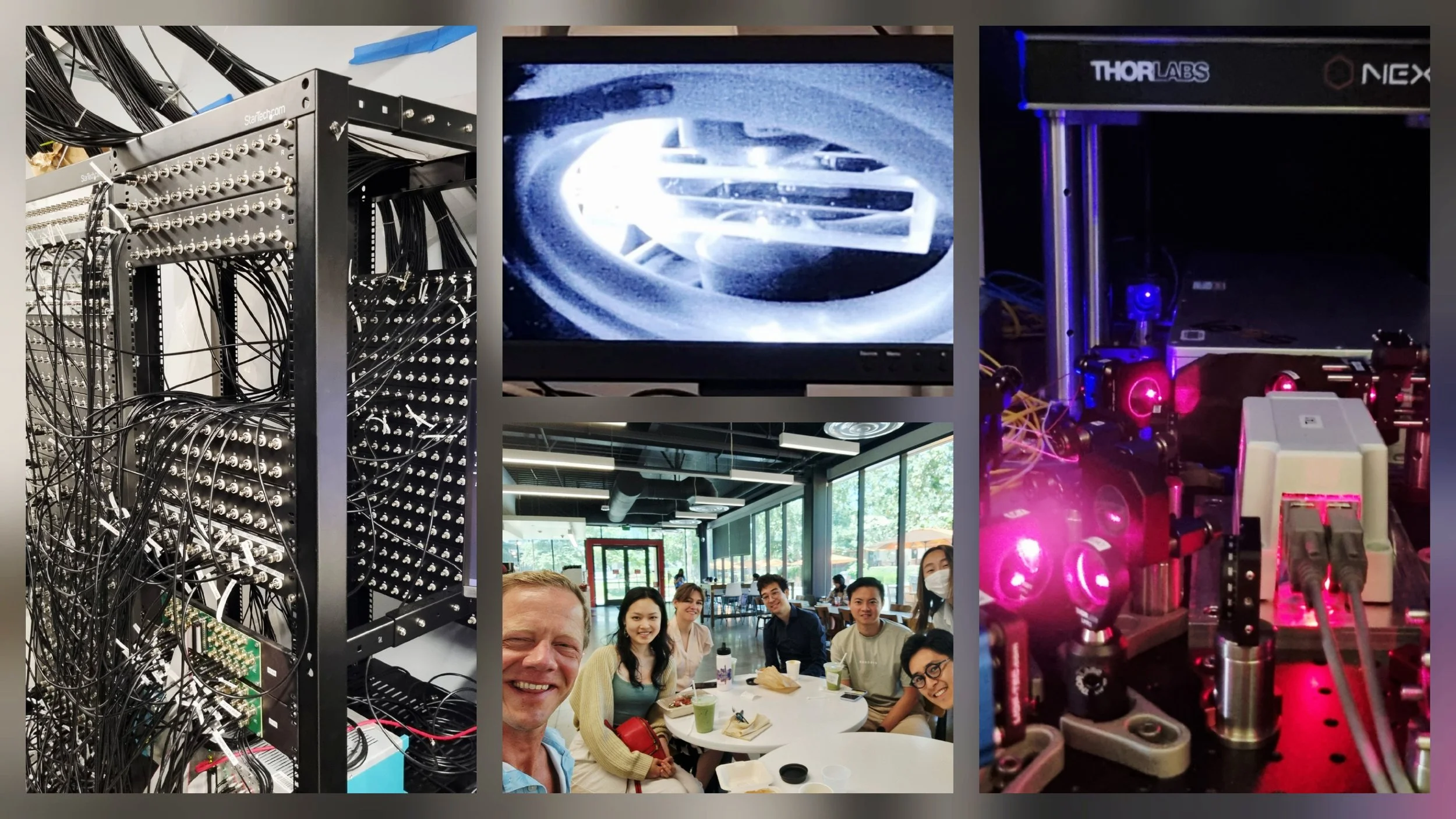
Pasadena, CA – On July 6, 2024, a team from the Stanford Center for Responsible Quantum Technology (RQT) embarked on a research field trip to the California Institute of Technology (Caltech), one of the world's preeminent hubs for quantum science research. This visit, part of an ongoing collaboration between the two world-leading institutions, was a crucial exercise in bridging the gap between the deeply technical world of quantum research and the complex legal, ethical, and societal frameworks required to govern it. The delegation, consisting of RQT Founding Director Mauritz Kop, RQT Fellow Jin-Hee Lee, and Research Assistant to the Director Katie Liu, traveled from Stanford to the heart of Southern California to engage directly with the scientists and engineers who are building the future of quantum. The visit was hosted by RQT Fellow Franz Pfanner, a PhD candidate at Caltech, and focused on the groundbreaking work being done at Caltech's Institute for Quantum Information and Matter (IQIM).

The day was dedicated to exploring the groundbreaking work being done at Caltech's Institute for Quantum Information and Matter (IQIM), a flagship research center led by Professor Manuel Endres, within the university's prestigious Division of Physics, Mathematics and Astronomy. This visit underscores the RQT Center's commitment to fostering a deeply interdisciplinary dialogue, ensuring that the development of responsible quantum governance is informed by a hands-on understanding of the technology itself.

The Epicenter of Quantum Innovation: Caltech's IQIM

Caltech stands as a global powerhouse in quantum research, and at its core is the Institute for Quantum Information and Matter (IQIM). Under the leadership of Professor Manuel Endres, IQIM is dedicated to exploring the frontiers of quantum science, from the fundamental physics of quantum information to the development of novel quantum materials and devices. The institute's work is organized around several Major Activities (MAs), each tackling a different facet of the quantum puzzle.

Bridging Quantum Theory and Society: The Stanford RQT Projects

The visit to Caltech provided a rich technical context for the work being done by the Stanford RQT team, whose projects are focused on the human and societal dimensions of this emerging technological revolution.

Jin-Hee Lee, an RQT Fellow, is pioneering research in the nascent field of Quantum Human-Computer Interaction (Q-HCI). Her project addresses a critical, yet often overlooked, aspect of the quantum future: how will humans interact with these powerful and counterintuitive machines? As quantum computers move beyond the binary logic of classical computing and into the probabilistic realm of qubits and superposition, the interfaces through which we engage with them must be completely re-imagined. Jin-Hee's work, guided by the ELSPI (Ethical, Legal, Social, and Policy Implications) framework, aims to ensure that these interfaces are not only functional but also accessible, intuitive, and ethically designed, preventing the creation of a new digital divide and keeping humanity at the center of the quantum age.

Katie Liu, a Research Assistant at the RQT Center, is focusing on the intersection of quantum technology and neuroscience. Her project, "Responsible Quantum AI in Healthcare – Neurotechnology and Beyond," explores the transformative potential of quantum AI (QAI) to enhance diagnostics and treatments for complex neurological conditions like Alzheimer's and Parkinson's disease. Using the SEA (Safeguarding, Engaging, Advancing) principles as her guide, Katie is investigating how quantum algorithms can analyze the vast datasets generated by neuroimaging and real-time brain monitoring to create personalized treatment plans. Her research also addresses the profound ethical challenges of this work, from ensuring patient data privacy through quantum-resistant encryption to mitigating the dual-use risks of advanced neurotechnology.

A Cross-pollination of Disciplines and a Moment of Reflection

Following the intellectually stimulating day at Caltech, the Stanford delegation visited The Huntington Library, Art Museum, and Botanical Gardens, taking time to reflect in the serene beauty of the Chinese Garden. The garden, with its intricate design and harmonious balance of natural and man-made elements, served as a powerful metaphor for the work ahead: building a responsible quantum future requires a similar blend of technical ingenuity, ethical foresight, and a deep appreciation for the human values we seek to preserve and enhance.

The journey to a quantum-enabled world is just beginning. But as the collaboration between institutions like Stanford and Caltech demonstrates, by working together across disciplines, we can ensure that this powerful new chapter in human history is written not with reckless abandon, but with wisdom, responsibility, and a shared commitment to the common good.

Meer lezen
Mauritz Kop Speaks on Quantum Ethics, Intellectual Property and Innovation at NASA SWEEEP Event

On October 3, 2022, a interdisciplinary dialogue on the future of quantum technology and its societal implications took place within a consortium focused on some of the most pressing environmental challenges of our time. Mauritz Kop, a visiting quantum and law scholar at Stanford University, was invited to address a workshop for the SouthWest Engine for Environment and Economic Prosperity (SWEEEP), a major initiative led by a consortium including NASA’s Jet Propulsion Laboratory (JPL), CalTech, and California State University, Northridge. The event, part of the National Science Foundation (NSF) Regional Innovation Engines program, provided a platform to discuss the intricate web of ethical, legal, socio-economic, and policy implications—termed "Quantum-ELSPI"—that must be navigated as quantum technologies are harnessed to address grand challenges like water scarcity and agricultural sustainability.

The Institutional Context: NASA and the SWEEEP Mission

The National Aeronautics and Space Administration (NASA), established in 1958, has a storied history of pushing the boundaries of science and technology for the benefit of humanity. While renowned for space exploration, its mission extends deeply into Earth science, utilizing its unique vantage point from space to understand and protect our home planet. From monitoring climate change and weather patterns to managing natural resources, NASA’s work is foundational to global environmental stewardship.

This commitment to terrestrial challenges is exemplified by its involvement in the SWEEEP initiative. SWEEEP is a direct response to the NSF Regional Innovation Engines program, a nationwide effort to catalyze and accelerate regional-scale, R&D-based innovation ecosystems. The program is designed to fund "Engines" that advance critical technologies, address societal challenges, promote economic growth, and cultivate regional talent, with potential funding of up to $160 million over ten years per Engine.

It was within this context of ambitious technological solution-building that Mauritz Kop was invited to provide a crucial perspective on governance and responsible innovation. The leaders of the initiative, including Edward Chow of NASA JPL and Bingbing Li of California State University Northridge, recognized that developing powerful new technologies carries a responsibility to proactively address their societal impact.

Quantum-ELSPI: A Framework for Responsible Innovation

In his address, Mauritz Kop introduced the comprehensive concept of Quantum-ELSPI, arguing for a multidisciplinary approach that integrates ethical, legal, socio-economic, and policy considerations directly into the R&D lifecycle. He stressed the importance of "building bridges between disciplines," enabling quantum physicists and engineers to communicate effectively with experts in the humanities and social sciences. The goal is not to give premature, all-encompassing answers, but to begin by asking the right questions.

For a project like SWEEEP, this means looking beyond the technical specifications of a quantum sensor to consider the legal frameworks for the data it collects, the ethical implications of its use in agriculture, and the socio-economic impact on farming communities. Kop noted that NSF reviewers would likely value such a forward-thinking awareness of the complex societal dimensions of the proposed technological interventions.

Intellectual Property in the Quantum Age: Fostering or Hindering Innovation?

A significant portion of the discussion was dedicated to the role of intellectual property (IP) in the quantum domain. Quantum computers and related systems are extraordinarily complex, comprising myriad components, each potentially protected by its own IP right. Kop described this as a "rainbow of IP rights," where patents, copyrights, trade secrets, and trademarks can create a dense and overlapping landscape.

While IP is designed to incentivize invention, he cautioned that an over-reliance on exclusive rights could lead to "IP overprotection," potentially stifling the cumulative, follow-on innovation that is essential for a burgeoning field like quantum technology. The challenge is to balance the need to protect inventions with the goal of building an open, thriving global quantum ecosystem.

Meer lezen